
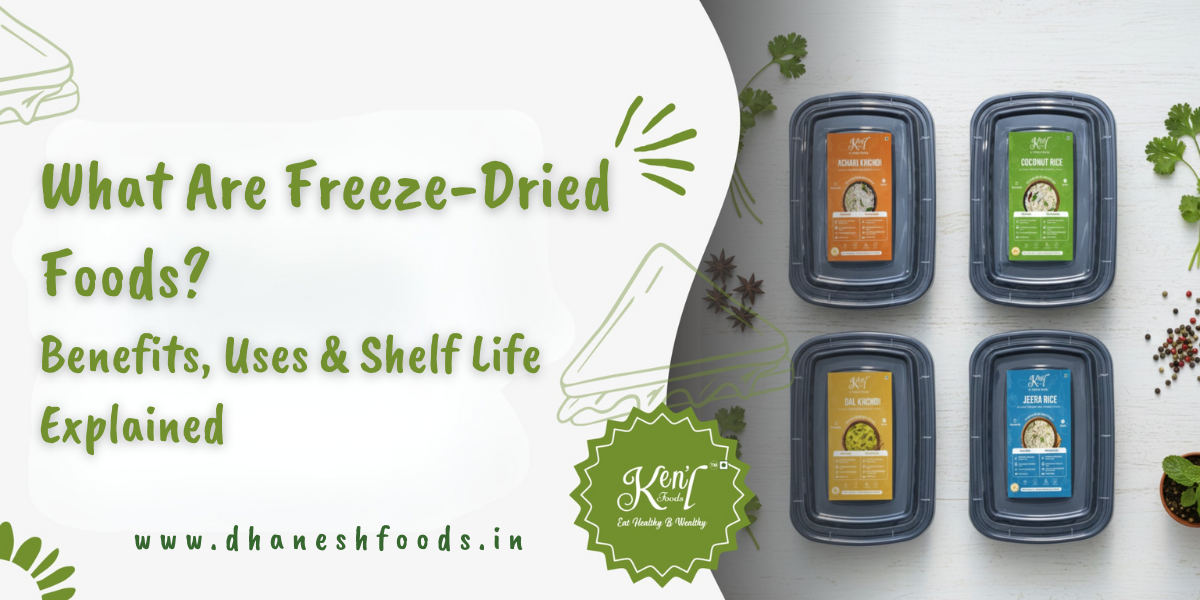
Freeze-dried foods are becoming increasingly popular across households, food industries, and global supply chains. From health-conscious consumers to emergency preparedness planners, Freeze-Dried Products are valued for their long shelf life, lightweight nature, and superior nutrient retention.
At Ken’l Foods, freeze-drying is more than a preservation method—it is a commitment to quality, innovation, and sustainability. By locking in freshness at its peak, we ensure food remains nutritious, flavorful, and reliable for long-term use without compromising integrity.
What Are Freeze-Dried Foods?
Freeze-dried foods are foods that have had nearly all their moisture removed using a low-temperature dehydration process known as lyophilization. This method preserves the original structure, nutrients, taste, and aroma of food far better than traditional drying techniques.
Key Characteristics of Freeze-Dried Foods
- Extremely low moisture content (1–4%)
- Lightweight and easy to store
- Retains original shape and color
- Rehydrates quickly
- Long shelf life without preservatives
How Does the Freeze-Drying Process Work?
The freeze-drying process involves three carefully controlled stages designed to preserve food at its best.
Step 1: Freezing at Peak Freshness
Foods are rapidly frozen at very low temperatures, locking in nutrients and preventing cellular damage.
Step 2: Primary Drying (Sublimation)
Under vacuum conditions, frozen water turns directly into vapor without becoming liquid, gently removing moisture.
Step 3: Secondary Drying (Desorption)
Any remaining bound moisture is eliminated to ensure long-term stability and shelf life.
This advanced process allows Ken’l Foods to maintain food quality while extending durability naturally.
Why Freeze-Dried Foods Are Better Than Traditional Dried Foods
Unlike air-dried or sun-dried foods, freeze-drying does not use heat that can destroy sensitive nutrients.
Freeze-Dried vs Dehydrated Foods
| Feature | Freeze-Dried | Dehydrated |
| Nutrient Retention | Very High | Moderate |
| Texture | Light & Crisp | Dense |
| Shelf Life | 20–30 Years | 1–5 Years |
| Rehydration | Fast | Slow |
| Flavor Retention | Excellent | Reduced |
Nutritional Value of Freeze-Dried Foods
One of the biggest advantages of freeze-dried foods is their exceptional nutritional preservation.
Nutrients Retained During Freeze-Drying
- Vitamins (A, C, B-complex)
- Minerals (Iron, Potassium, Magnesium)
- Proteins and amino acids
- Antioxidants
- Natural enzymes
Because no artificial preservatives are required, freeze-dried foods are ideal for clean-label and health-focused diets.
Benefits of Freeze-Dried Foods
Freeze-dried foods offer numerous advantages for both consumers and businesses.
1. Long Shelf Life Without Preservatives
Freeze-dried foods can last 20 to 30 years when stored correctly, making them ideal for long-term storage.
2. Lightweight and Portable
With up to 98% water removed, freeze-dried foods are perfect for travel, trekking, and export.
3. Superior Taste and Texture
Once rehydrated, foods regain their original flavor and texture remarkably well.
4. Reduced Food Waste
Long shelf life means less spoilage, supporting sustainability goals.
5. Convenient and Ready-to-Use
Minimal preparation, fast rehydration, and easy storage make them consumer-friendly.
Shelf Life of Freeze-Dried Foods Explained
The shelf life of freeze-dried foods depends on storage conditions and packaging quality.
Average Shelf Life
- Commercially packed: 20–30 years
- Home freeze-dried: 5–10 years
- Once opened: 6–12 months
Factors Affecting Shelf Life
- Moisture exposure
- Oxygen levels
- Light exposure
- Storage temperature
- Packaging material (vacuum-sealed, nitrogen flushed)
At Ken’l Foods, advanced packaging ensures maximum shelf stability.
How to Store Freeze-Dried Foods Properly
Correct storage is essential to maintain quality.
Best Storage Practices
- Store in airtight, moisture-proof packaging
- Keep in a cool, dark, and dry place
- Avoid exposure to humidity
- Use oxygen absorbers for long-term storage
Uses of Freeze-Dried Foods
Freeze-dried foods serve a wide range of applications across industries.
Household & Daily Use
- Quick meals
- Healthy snacks
- Smoothies and cereals
- Baby food ingredients
Travel & Outdoor Activities
- Trekking and camping meals
- Military rations
- Space missions
- Emergency food kits
Food Manufacturing & HORECA
- Ready-to-eat meals
- Instant soups and curries
- Bakery and confectionery ingredients
- Beverage formulations
Are Freeze-Dried Foods Healthy?
Yes, freeze-dried foods are considered one of the healthiest preserved food options available.
Health Benefits
- Minimal nutrient loss
- No artificial preservatives
- Suitable for diabetic and low-sodium diets
- Supports clean eating lifestyles
They are especially valuable for people with busy schedules who still prioritize nutrition.
Freeze-Dried Foods for Emergency Preparedness
Freeze-dried foods are widely used for disaster preparedness due to their reliability.
Why They’re Ideal for Emergencies
- Long shelf life
- No refrigeration required
- Lightweight and compact
- Easy to prepare with water
Sustainability Benefits of Freeze-Drying
Freeze-drying supports eco-friendly food systems.
Environmental Advantages
- Reduced food waste
- Lower transportation emissions
- Efficient resource utilization
- Supports sustainable agriculture
Ken’l Foods integrates responsible sourcing and efficient processing to reduce environmental impact.
Freeze-Dried Foods for Export and Global Trade
Freeze-dried foods are highly suitable for international markets.
Export Advantages
- Lower shipping costs
- Extended shelf life for long transit times
- Stable product quality
- Reduced spoilage risk
This makes freeze-dried products ideal for bulk supply and private labeling.
Common Questions About Freeze-Dried Foods
Are freeze-dried foods the same as dehydrated foods?
No. Freeze-dried foods retain more nutrients, flavor, and texture than dehydrated foods.
Do freeze-dried foods need refrigeration?
No. They are shelf-stable when stored properly.
Can freeze-dried foods go bad?
Only if exposed to moisture, oxygen, or improper storage conditions.
Are freeze-dried foods expensive?
While initial cost may be higher, long shelf life and reduced waste make them cost-effective.
Why Choose Ken’l Foods for Freeze-Dried Products?
At Ken’l Foods, freeze-drying is a promise of quality, consistency, and care.
Our Commitment
- Advanced freeze-drying technology
- Strict quality control
- Clean-label processing
- Sustainable sourcing
- Customer-focused innovation
Each product reflects our dedication to delivering convenient, nutritious, and responsibly crafted food solutions.
Final Thoughts: The Future of Freeze-Dried Foods
Freeze-dried foods represent the future of food preservation—combining nutrition, convenience, sustainability, and longevity. As lifestyles evolve and demand for clean, long-lasting food grows, freeze-drying stands out as a superior solution.With innovation at its core, Ken’l Foods continues to redefine quality in freeze-dried food production, delivering products that meet modern needs while honoring nature’s integrity.